EBOOK DOWNLOAD PDF The Culture Code: The Secrets of Highly Successful Groups
READ [EBOOK] The Culture Code: The Secrets of Highly Successful Groups [PDF Ebook]
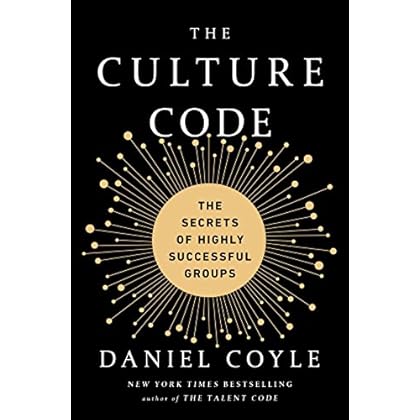
Description of The Culture Code: The Secrets of Highly Successful Groups
Review Advance praise for The Culture Code�I�ve been waiting years for someone to write this book�I�ve built it up in my mind into something extraordinary. But it is even better than I imagined. Daniel Coyle has produced a truly brilliant, mesmerizing read that demystifies the magic of great groups. It blows all other books on culture right out of the water. Read it immediately.��Adam Grant, New York Times bestselling author of Option B, Originals, and Give and Take � �If you want to understand how successful groups work�the signals they transmit, the language they speak, the cues that foster creativity�you won�t find a more essential guide than The Culture Code. This book is a marvel of insight and practicality.��Charles Duhigg, New York Times bestselling author of The Power of Habit and Smarter Faster Better � �The Culture Code is a step-by-step guidebook to building teams that are not just more effective but happier. Whether you lead a team or are a team member, this book is a must-read.��Laszlo Bock, CEO of Humu, former SVP of People Operations at Google, and author of Work Rules! � �Daniel Coyle has a gift for demystifying elite performance and breaking it down into empirical facts. This is indispensable for anyone looking to lead, build, or find an elite culture.��Rich Diviney, retired Navy SEAL Officer and director of outreach for the Barry-Wehmiller Leadership Institute�There are profound ideas on every single page, stories that will change the way you work, the way you lead, and the impact you have on the world. Highly recommended, an urgent read.��Seth Godin, author of Linchpin Read more About the Author Daniel Coyle is the New York Times bestselling author of The Talent Code, The Little Book of Talent, The Secret Race, Lance Armstrong�s War, and Hardball: A Season in the Projects. Coyle, who works as an advisor to the Cleveland Indians, lives in Cleveland, Ohio, during the school year and in Homer, Alaska, during the summer with his wife, Jen, and their four children. Read more Excerpt. � Reprinted by permission. All rights reserved. � Introduction When Two Plus Two Equals Ten �Let�s start with a question, which might be the oldest ques- tion of all: Why do certain groups add up to be greater than the sum of their parts, while others add up to be less? A few years ago the designer and engineer Peter Skillman held a competition to find out. Over several months, he as- sembled a series of four-person groups at Stanford, the Uni- versity of California, the University of Tokyo, and a few other places. He challenged each group to build the tallest possible structure using the following items: � �� twenty pieces of uncooked spaghetti �� one yard of transparent tape �� one yard of string �� one standard-size marshmallow � The contest had one rule: The marshmallow had to end� �up on top. The fascinating part of the experiment, however, had less to do with the task than with the participants. Some of the teams consisted of business school students. The oth- ers consisted of kindergartners. The business students got right to work. They began talk- ing and thinking strategically. They examined the materials. They tossed ideas back and forth� and� asked� thoughtful,� avvy questions. They generated several options, then honed he most promising ideas. It was professional, rational, and ntelligent. The process resulted in a decision to pursue one particular strategy. Then they divided up the tasks� and� tarted building. The kindergartners took a different approach. They� did not strategize. They did not analyze or share experiences. They did not ask questions, propose options, or hone ideas.�� n fact, they barely talked at all.� They� stood� very� close� to one another. Their interactions were not smooth or orga- nized. They abruptly grabbed materials from one another� and started building, following no plan or� strategy.� When hey spoke, they spoke in short bursts: �Here! No,� here!�� Their entire technique might be described as trying a bunch of stuff together. If you had to bet which of the teams would win, it would not be a difficult choice. You would bet on the business school tudents, because they possess the intelligence, skills, and ex- perience to do a superior job. This is the way we normally hink about group performance. We presume skilled individ- uals will combine to produce skilled performance in the same way we presume two plus two will combine to produce four. Your bet would be wrong. In dozens of trials, kindergart- ners built structures that averaged twenty-six inches tall, while business school students built structures that averaged ess than ten inches.*� Teams of kindergartners also defeated teams of lawyers (who built towers hat averaged fifteen inches) as well as teams of CEOs (twenty-two inches). The result is hard to absorb because it feels like an illusion. We see smart, experienced business school� students, and we find it difficult to imagine that they would combine to produce a poor performance. We see unsophisticated, inexperienced kindergartners, and we find it difficult to imagine that they would combine to produce a successful perfor- mance. But this illusion, like every illusion, happens because our instincts have led us to focus on the wrong details. We focus on what we can see�individual skills. But individual skills are not what matters. What matters is the interaction. The business school students appear to be collaborating, but in fact they are engaged in a process psychologists call status management. They are figuring out where they fit into the larger picture: Who is in charge? Is it okay to criticize someone�s idea? What are the rules here? Their interactions appear smooth, but their� underlying� behavior is� riddled with inefficiency, hesitation, and subtle competition. Instead of focusing on the task, they are navigating their uncertainty about one another. They spend so much time managing sta- tus that they fail to grasp the essence of the problem (the marshmallow is relatively heavy, and the spaghetti is hard to secure). As a result, their first efforts often collapse, and they run out of time. The actions of the kindergartners appear disorganized on the surface. But when you view them as a single entity, their behavior is efficient and effective. They are not competing� for status. They stand shoulder to shoulder and work ener- getically together. They move quickly,� spotting� problems� and offering help. They experiment, take risks, and notice outcomes, which guides them toward effective solutions. The kindergartners succeed not because they are smarter but because they work together in a smarter way. They are apping into a simple and powerful method in which a group of ordinary people can create a performance far beyond the um of their parts. This book is the story of how that method works.� Group culture is one of the most powerful forces on the planet. We sense its presence inside successful businesses, hampionship teams, and thriving families, and we sense when it�s absent or toxic. We can measure its impact on the bottom line. (A strong culture increases net income 756 percent over eleven years, according to a Harvard study of more han two hundred companies.) Yet the inner workings of ulture remain mysterious. We all want strong culture in our organizations, communities, and families. We all know that t works. We just don�t know quite how it works. The reason may be based in the way we think about cul- ure. We tend to think about it as a group trait, like DNA. Strong, well-established cultures like those of Google, Dis- ney, and the Navy SEALs feel so singular and distinctive that hey seem fixed, somehow predestined. In this way of think- ng, culture is a possession determined by fate. Some groups have the gift of strong culture; others don�t. This book takes a different approach. I spent the last four years visiting and researching eight of the world�s most suc- essful groups, including a special-ops military unit, an nner-city school, a professional basketball team, a movie�studio, a comedy troupe, a gang of jewel thieves, and others.* I found that their cultures are created by a specific set of skills. These skills, which tap into the power of our social brains to create interactions exactly like the ones used by the kindergartners building the spaghetti tower, form the structure of this book. Skill 1�Build Safety�explores how signals of connection generate bonds of belonging and iden- tity. Skill 2�Share Vulnerability�explains how habits of mutual risk drive trusting cooperation. Skill 3�Establish Purpose�tells how narratives create shared goals and values. The three skills work together from the bottom up, first building group connection and then channeling it into ac- tion. Each part of the book is structured like a tour: We�ll first explore how each skill works, and then we�ll go into the field to spend time with groups and leaders who use these methods every day. Each part will end with a collection of concrete suggestions on applying these skills to your group. In the following pages, we�ll spend time inside some of the planet�s top-performing cultures and see what makes them tick. We�ll take a look inside the machinery of the brain and see how trust and belonging are built. Along the way, we�ll see that being smart is overrated, that showing fallibility is crucial, and that being nice is not nearly as important as you might think. Above all, we�ll see how leaders of high-performing cultures navigate the challenges of achieving excellence in a fast-changing world. While successful culture can look and feel like magic, the truth is that�� t�s not. Culture is a set of living relationships working toward a shared goal. It�s not something you are.� It�s something you do.* I chose groups using the following qualifications: (1) they had performed in the top 1 percent of their domain for at least a decade (where applicable);(2) they had succeeded with a range of different personnel; (3) their culture had been admired by knowledgeable people across their industry and be- yond. To help guard against selection bias, I also looked at many cultures that weren�t so successful (see page 40 for an example). Read more
Books are everywhere. Libraries big and small and bookstores are splattered all over college campuses and larger cities. They are all filled with one of the most important things of all time—books. Those who read books appreciate the multiple places to find books. Those who aren’t fans of books, don’t understand what could make readers want to obsess over books. There is a reason for their obsession, though. You hear it all the time: read every day.Reading is important because it develops our thoughts, gives us endless knowledge and lessons to read while keeping our minds active. Reading books to help us learn and understand and makes us smarter, not to mention the knowledge, vocabulary and thinking skills we develop.In the world today where information are abundant, reading books is one of the best ways to be informed. Though reading might seem like simple fun, it can be helping your body and mind without you even realising what is happening. What makes reading so important? It can be for these reasons and not just knowledge.For those who don’t enjoy it, you might change your mind after hearing about the benefits. Can something so easy and fun be so helpful in your life? Of course, it can! Reading can be a great benefit to you in many different ways—such as sharpening your mind, imagination, and writing skills. With so many advantages, it should be an everyday occurrence to read at least a little something.Books can hold and keep all kinds of information, stories, thoughts and feelings unlike anything else in this world. Can words, paragraphs, and fictional worlds be all that great for you and your health? It definitely can, and it is a timeless form of entertainment and information
Step-By Step To Download The Culture Code: The Secrets of Highly Successful Groups
- Click The Button "DOWNLOAD" Or "READ ONLINE"
- Sign UP registration to access & UNLIMITED BOOKS
- DOWNLOAD as many books as you like (personal use)
- CANCEL the membership at ANY TIME if not satisfied
- Join Over 80.000 & Happy Readers.
OR

No comments :
Post a Comment