[R.E.A.D] Teaching With Trauma in Mind: Teaching Black and Poor Students More Effectively by Being Trauma-Informed
[read ebook] Teaching With Trauma in Mind: Teaching Black and Poor Students More Effectively by Being Trauma-Informed (PDF) Ebook
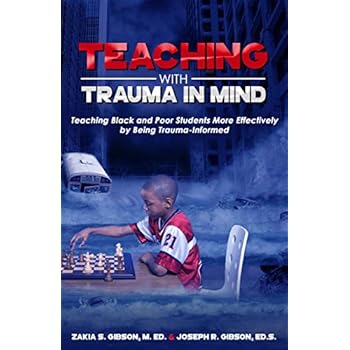
Description for Teaching With Trauma in Mind: Teaching Black and Poor Students More Effectively by Being Trauma-Informed
About five years ago, the National Task Force on Children Exposed to Violence recommended (or perhaps more accurately, warned) that “every school in our country should have trauma-informed staff and consultants providing school-based trauma-specific treatment.” Apparently, few schools—especially those with high-poverty, high-minority student populations—actually heard (and heeded) the recommendation. Most teachers and administrators have accepted that there is simply not enough time to focus on “soft skills” like teaching impulse control, resilience, or emotional regulation and concurrently cover enough content to get test scores high enough to maintain their employment. Our rebuttal to this conclusion is that time isn’t their problem, values and priorities are. In other words, if being a trauma-informed educator was adequately valued, then it would be prioritized and time would be “found” to be a trauma-informed educator. Becoming trauma-informed also requires a fundamental understanding that trauma, to quote Catherine Woodiwiss, “permanently changes us.” Specifically, the chronic stress accompanying ongoing (or complex) childhood trauma can negatively and enduringly change a child’s brain. Childhood traumas like physical or emotional abuse, sexual assault, and persistent family poverty typically triggers neuroplasticity.The commonness of students in classrooms across this country experiencing trauma and trauma-based maladaptive neuroplasticity is far greater than most of us would ever comfortably imagine. Most studies have concluded that 25-40% of all students have already been exposed to (and their brains changed by) some type of acute or complex childhood trauma. Considering the traumatic impact of race and poverty, instead of 25-40%, in these schools we’re possibly looking at closer to 80-90% of students presumably having already been exposed to (and their brains negatively changed by) childhood trauma.Race and poverty are highly prevalent traumatic stressors—logically—in schools that have higher percentages of Black and poor students. However, because race and poverty are not typically recognized by educators as traumatic stressors, trauma is not looked at as the most likely motivation for the common negative student behaviors experienced in such schools. Moreover, becoming more trauma-informed is not particularly valued by educators in schools that have higher percentages of Black and poor students as a means of becoming more effective in managing these negative student behaviors. Students impacted by childhood trauma tend to struggle with regulating negative emotions and impulsivity as well as overcoming their overreliance on self-handicapping academic behaviors. They tend to disproportionately engage in disruptive classroom antics, apathy, absenteeism, noncompliance, incompetence, excuses, vulgarity, and misplaced aggression. Oftentimes, school gradually stops being understood as a priority for students experiencing childhood trauma; survival, or rather, somehow dealing the fear of not surviving, semiconsciously becomes too much of a priority. Unfortunately, childhood trauma isn’t typically perceived or responded to the same in high-poverty, high-minority schools as it is in more affluent, majority-White schools. There’s a greater reluctance to be trauma-informed among the instructional staff serving the former because the negative classroom behaviors of poor, Black or Latino students are automatically seen as confirmation of stigma-based expectations rather than consequences of trauma-based maladaptive neuroplasticity. Fortunately, this reaction can be acknowledged and successfully modified.
Books are everywhere. Libraries big and small and bookstores are splattered all over college campuses and larger cities. They are all filled with one of the most important things of all time—books. Those who read books appreciate the multiple places to find books. Those who aren’t fans of books, don’t understand what could make readers want to obsess over books. There is a reason for their obsession, though. You hear it all the time: read every day.Reading is important because it develops our thoughts, gives us endless knowledge and lessons to read while keeping our minds active. Reading books to help us learn and understand and makes us smarter, not to mention the knowledge, vocabulary and thinking skills we develop.In the world today where information are abundant, reading books is one of the best ways to be informed. Though reading might seem like simple fun, it can be helping your body and mind without you even realising what is happening. What makes reading so important? It can be for these reasons and not just knowledge.For those who don’t enjoy it, you might change your mind after hearing about the benefits. Can something so easy and fun be so helpful in your life? Of course, it can! Reading can be a great benefit to you in many different ways—such as sharpening your mind, imagination, and writing skills. With so many advantages, it should be an everyday occurrence to read at least a little something.Books can hold and keep all kinds of information, stories, thoughts and feelings unlike anything else in this world. Can words, paragraphs, and fictional worlds be all that great for you and your health? It definitely can, and it is a timeless form of entertainment and information
Step-By Step To Download Teaching With Trauma in Mind: Teaching Black and Poor Students More Effectively by Being Trauma-Informed
- Click The Button "DOWNLOAD" Or "READ ONLINE"
- Sign UP registration to access & UNLIMITED BOOKS
- DOWNLOAD as many books as you like (personal use)
- CANCEL the membership at ANY TIME if not satisfied
- Join Over 80.000 & Happy Readers.
OR

No comments :
Post a Comment