[PDF] DOWNLOAD READ How Learning Works: Seven Research-Based Principles for Smart Teaching
Read Online How Learning Works: Seven Research-Based Principles for Smart Teaching (Ebook Online)
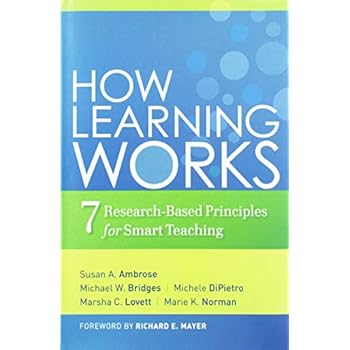
Description of How Learning Works: Seven Research-Based Principles for Smart Teaching
From the Inside Flap Any conversation about effective teaching must begin with a consideration of how students learn. However, instructors may find a gap between resources that focus on the technical research on learning and those that provide practical classroom strategies. How Learning Works provides the bridge for such a gap. In this volume, the authors introduce seven general principles of learning, distilled from the research literature as well as from twenty-seven years of experience working one-on-one with college faculty. They have drawn on research from a breadth of perspectives (cognitive, developmental, and social psychology; educational research; anthropology; demographics; and organizational behavior) to identify a set of key principles underlying learning-from how effective organization enhances retrieval and use of information to what impacts motivation. These principles provide instructors with an understanding of student learning that can help them see why certain teaching approaches are or are not supporting student learning, generate or refine teaching approaches and strategies that more effectively foster student learning in specific contexts, and transfer and apply these principles to new courses. For anyone who wants to improve his or her students' learning, it is crucial to understand how that learning works and how to best foster it. This vital resource is grounded in learning theory and based on research evidence, while being easy to understand and apply to college teaching. Read more From the Back Cover Praise for How Learning Works 'How Learning Works is the perfect title for this excellent book. Drawing upon new research in psychology, education, and cognitive science, the authors have demystified a complex topic into clear explanations of seven powerful learning principles. Full of great ideas and practical suggestions, all based on solid research evidence, this book is essential reading for instructors at all levels who wish to improve their students' learning.' ?Barbara Gross Davis, assistant vice chancellor for educational development, University of California, Berkeley, and author, Tools for Teaching 'This book is a must-read for every instructor, new or experienced. Although I have been teaching for almost thirty years, as I read this book I found myself resonating with many of its ideas, and I discovered new ways of thinking about teaching.' ?Eugenia T. Paulus, professor of chemistry, North Hennepin Community College, and 2008 U.S. Community Colleges Professor of the Year from The Carnegie Foundation for the Advancement of Teaching and the Council for Advancement and Support of Education 'Thank you Carnegie Mellon for making accessible what has previously been inaccessible to those of us who are not learning scientists. Your focus on the essence of learning combined with concrete examples of the daily challenges of teaching and clear tactical strategies for faculty to consider is a welcome work. I will recommend this book to all my colleagues.' ?Catherine M. Casserly, senior partner, The Carnegie Foundation for the Advancement of Teaching 'As you read about each of the seven basic learning principles in this book, you will find advice that is grounded in learning theory, based on research evidence, relevant to college teaching, and easy to understand. The authors have extensive knowledge and experience in applying the science of learning to college teaching, and they graciously share it with you in this organized and readable book.' ?From the Foreword by Richard E. Mayer, professor of psychology, University of California, Santa Barbara; coauthor, e-Learning and the Science of Instruction; and author, Multimedia Learning Read more See all Editorial Reviews
Books are everywhere. Libraries big and small and bookstores are splattered all over college campuses and larger cities. They are all filled with one of the most important things of all time—books. Those who read books appreciate the multiple places to find books. Those who aren’t fans of books, don’t understand what could make readers want to obsess over books. There is a reason for their obsession, though. You hear it all the time: read every day.Reading is important because it develops our thoughts, gives us endless knowledge and lessons to read while keeping our minds active. Reading books to help us learn and understand and makes us smarter, not to mention the knowledge, vocabulary and thinking skills we develop.In the world today where information are abundant, reading books is one of the best ways to be informed. Though reading might seem like simple fun, it can be helping your body and mind without you even realising what is happening. What makes reading so important? It can be for these reasons and not just knowledge.For those who don’t enjoy it, you might change your mind after hearing about the benefits. Can something so easy and fun be so helpful in your life? Of course, it can! Reading can be a great benefit to you in many different ways—such as sharpening your mind, imagination, and writing skills. With so many advantages, it should be an everyday occurrence to read at least a little something.Books can hold and keep all kinds of information, stories, thoughts and feelings unlike anything else in this world. Can words, paragraphs, and fictional worlds be all that great for you and your health? It definitely can, and it is a timeless form of entertainment and information
Step-By Step To Download How Learning Works: Seven Research-Based Principles for Smart Teaching
- Click The Button "DOWNLOAD" Or "READ ONLINE"
- Sign UP registration to access & UNLIMITED BOOKS
- DOWNLOAD as many books as you like (personal use)
- CANCEL the membership at ANY TIME if not satisfied
- Join Over 80.000 & Happy Readers.
OR

No comments :
Post a Comment