READ [EBOOK] Trauma-Sensitive Early Education: Helping Pre-School & Elementary Students Thrive!
Read PDF Trauma-Sensitive Early Education: Helping Pre-School & Elementary Students Thrive! (Ebook Online)
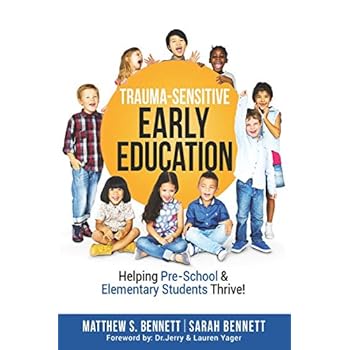
Description of Trauma-Sensitive Early Education: Helping Pre-School & Elementary Students Thrive!
Review Teachers are often under-resourced, especially when it comesto working with students with difficult behaviors.� 'Trauma-Sensitive Early Education' works tofill these gaps by providing readers with a clear understanding of how traumaaffects the developing brain.� Thisunderstanding helps teachers see these difficult behaviors as a cry for help,so that they can in turn work to support those students to personal andacademic success.� Beyond just providingfacts however, the addition of a storyline detailing one school's journey totrauma-sensitive practices provides a peek into this process that is easy tounderstand and relate to.� 'Trauma-SensitiveEarly Education' is an excellent resource for any teacher, administrator, orschool to provide holistic support of the students in their care to achievetrue success in their classroom and school environments.�Elandriel Lewis | Manager, Early Learning Initiatives�United Way of Metropolitan Nashville Read more From the Author Today,in every community around the world, something is going to happen to aninnocent child. If left untreated, this single event will threaten todrastically increase the chance that the child will get cancer, an autoimmunedisease, diabetes, or a sexually transmitted infection such as HIV. Besidesmedical issues, these children are also more likely to fail in school, becomeinvolved in the criminal justice system, experience homelessness, developmental illness and drug addictions, struggle with unemployment and poverty, andexperience domestic violence. Ultimately, the child is at risk of losing 20 yearsoff their life expectancy. Thankfully,this child will walk into a school tomorrow. Ideally positioned to identifywhat happened to the child and facilitate treatment, schools play a unique andlife-saving role in the future health and well-being of these children. Thoselucky enough to get proper support and treatment not only dramatically lowertheir risk for the psychological, medical, and social risks listed above, theytransform their pain and suffering into a powerful type of resilience thatserves them well throughout the rest of their lives. Whatis this powerful event? Childhood trauma. The majority of students willexperience some form of emotional, physical, or sexual abuse, neglect, familystruggles or dysfunction, racism, homelessness, or poverty by their eighteenthbirthday, potentially robbing them of their ability to thrive academically andestablish a meaningful quality of life. Our growing knowledge of trauma is acall to action for every person that works in education and cares about thechildren in their community. Trauma-Sensitive Early Education:Helping Pre-School & Elementary Students Thrive! demonstrates the devastating effectsthat trauma inflicts on students, and how the resulting anguish manifests inthe classroom as academic and behavioral struggles. Understanding the problemis just the first part of the journey taken in the book. This in-depthexploration guides educators in the process of creating dynamic classrooms andlessons that help students with trauma experience social and academic success. Currenteducational approaches work well for most students coming from stable healthyhomes with economic stability and the skills necessary to succeed socially andacademically. Unfortunately, the students who are left behind struggle, notbecause of a lack of motivation or some conscious desire to misbehave, butbecause the current system is not designed to identify and help treat the rootcause of their struggles. These kids are not 'bad kids'; they are victims ofuntreated traumatic events that happened to them due to no fault of their own. Studentswith untreated trauma lack the skills to succeed in current models of academicinstruction and behavioral management. Without an understanding of the effectsof trauma, educators focus on the behaviors, thus missing opportunities toconnect the student to resources and to help them build the skills they failedto learn at home. The great news is that the trauma-sensitive approaches putforth in Trauma-Sensitive Early Educationare best practices for all students, improving the educational experiencefor everyone.Afterhelping educators establish trauma-sensitive classrooms, the book examinesschool-wide strategies and behavioral-management approaches that help create asafe environment, while simultaneously getting help for students with trauma.Traditional models punish, suspend, and retraumatize students, furthering thepsychological, academic, and social struggles. A shift in paradigms providesreal solutions that help solve the underlying problems, improve schoolperformance, and create ideal learning environments for all students. Finally,the book further examinea the need to reform an antiquated educationalsystem that is failing too many students and communities. Traditionally,students with trauma quickly fall into pipelines to prison and poverty.Understanding trauma's impact helps us understand that it is not these kidsthat are failing in our schools; instead, our schools and traditionalapproaches to education are failing these students. Trauma-Sensitive Early Education provides a complete guide forteachers, school administrators, parents, policy-makers, and all those who careabout children and education, by providing a desperately needed paradigm shiftin philosophy and approach. Once people understand that students who struggledo so because they are victims of a treatable condition, it serves as a wake-upcall to ensure that every child gets the support and education they need tolive a meaningful life. So many of the larger social problems facing ourcommunities result from these students failing to get the help they need duringtheir critical developmental years. Read more See all Editorial Reviews
Books are everywhere. Libraries big and small and bookstores are splattered all over college campuses and larger cities. They are all filled with one of the most important things of all time—books. Those who read books appreciate the multiple places to find books. Those who aren’t fans of books, don’t understand what could make readers want to obsess over books. There is a reason for their obsession, though. You hear it all the time: read every day.Reading is important because it develops our thoughts, gives us endless knowledge and lessons to read while keeping our minds active. Reading books to help us learn and understand and makes us smarter, not to mention the knowledge, vocabulary and thinking skills we develop.In the world today where information are abundant, reading books is one of the best ways to be informed. Though reading might seem like simple fun, it can be helping your body and mind without you even realising what is happening. What makes reading so important? It can be for these reasons and not just knowledge.For those who don’t enjoy it, you might change your mind after hearing about the benefits. Can something so easy and fun be so helpful in your life? Of course, it can! Reading can be a great benefit to you in many different ways—such as sharpening your mind, imagination, and writing skills. With so many advantages, it should be an everyday occurrence to read at least a little something.Books can hold and keep all kinds of information, stories, thoughts and feelings unlike anything else in this world. Can words, paragraphs, and fictional worlds be all that great for you and your health? It definitely can, and it is a timeless form of entertainment and information
Step-By Step To Download Trauma-Sensitive Early Education: Helping Pre-School & Elementary Students Thrive!
- Click The Button "DOWNLOAD" Or "READ ONLINE"
- Sign UP registration to access & UNLIMITED BOOKS
- DOWNLOAD as many books as you like (personal use)
- CANCEL the membership at ANY TIME if not satisfied
- Join Over 80.000 & Happy Readers.
OR

No comments :
Post a Comment