[R.E.A.D] The Leadership Gap: What Gets Between You and Your Greatness
[read ebook] The Leadership Gap: What Gets Between You and Your Greatness (Ebook Online)
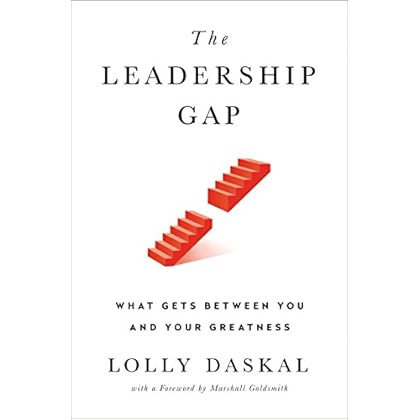
Description for The Leadership Gap: What Gets Between You and Your Greatness
Review ''Our weaknesses live in the shadows of our strengths, and this book does more than help us spot them--it shows us how to overcome them. Lolly Daskal takes us into the trenches of her executive coaching practice, carefully unpacking the self awareness gaps that hold leaders back and lightning the path to expanding our comfort zones.' -Adam Grant NYTimes Bestselling author Give and Take and Originals. �'The brilliance in the book is seen in the Leadership Gaps'- Marshall Goldsmith NYTimes Bestselling author What Got You Here Won't Get you There. 'I've seen talented leaders unwittingly make the biggest mistakes of their careers simply because they don't understand the complexities and pitfalls of their own strengths. The Leadership Gap offers terrific insight and valuable wisdom for high achievers who want to understand the tendencies that stand between them and meaningful success. --Sydney Finkelstein, author of Superbosses and Why Smart Executives Fail ''The Leadership Gap is fascinating, provocative, entertaining, and useful--a significant new contribution to how we think and act as leaders, and I highly recommend it.' --Jim Kouzes, coauthor of the bestselling The Leadership Challenge ''There's no shortage of thinking and writing about leadership, yet there's a desperate shortage of leaders everywhere we look. That's what makes Lolly Daskal's book so powerful. Thoughtful and practical, analytical and personal, it invites leaders to rethink what it takes to be great, and promises to help bridge the 'leadership gap' that plagues business and society. I urge you to read it.' --William C. Taylor, cofounder of Fast Company, author of Simply Brilliant ' In The Leadership Gap, Lolly Daskal reveals exactly what it is that makes great leaders great, along with the gaps that stand between leaders and their greatness. Every leader will benefit by applying the principles contained in this book, along with their people, their customers, and their companies.' --Emma Sepp�l�, author of The Happiness Track ' Today, leaders can only achieve greatness if they are willing to nd and ll their competency gaps. In this fast-moving and highly helpful read, Lolly Daskal will show you the seven archetypes of leadership as well as the opportunities and pitfalls each one contains. Read it and soar!' --Tim Sanders, New York Times bestselling author of Dealstorming and Love Is the Killer App: How to Win Business and Influence Friends ' 'An insightful new take on the world from one of my favorite leadership experts. Two Likeable thumbs up for this MUST READ!' --Dave Kerpen, author of The Art of People and Likeable Social Media ' In this deeply insightful book, leadership expert Lolly Daskal outlines a series of eye-opening and game-changing ideas, including why embracing weakness is the first step to achieving greatness. If you want instant insight into your clients, your boss, and even yourself, get this book. It will redefine the way you lead.' --Ron Friedman PhD, author of The Best Place to Work 'Lolly Daskal is a keen observer of human behavior in general and leaders in particular. The Leadership Gap does an excellent job of helping aspiring leaders and seasoned professionals alike to and their blind spots and to understand the variety of styles that are required to be a positive influence on the people around them. This book might just be the next best thing to having your own personal coach.' --Art Markman, PhD, author of Smart inking, Smart Change, and Brain Briefs 'The Leadership Gap reads like my story--a deep search for 'who I am being while I am leading.' If John Grisham wrote a book on leadership, it would be a compelling page-turner like this one. Don't miss this gift to the leader you can become. I promise you will be inspired, instructed, and invigorated.' --Chip R. Bell, author of Kaleidoscope: Delivering Innovative Service that Sparkles 'Great leaders understand who they are as leaders and what motivates them to do the things they do. If you want to become one of them, read Lolly Daskal's deeply insightful book. It has invaluable advice for leaders who want to propel themselves to the next level. It's essential reading for those who want to be great.'--Heidi Grant Halvorson, author of No One Understands You and What to Do About It�'The Leadership Gap is an exciting new contribution to the tired conversation of leadership, and artfully explains why some leaders succeed while others don't. Lolly Daskal draws on a wealth of expertise as leading global leadership consultant to identify the skills and gaps that exist within all of us.'--Cy Wakeman, author of Reality-Based Leadership��'As a leader there's one thing standing between you and your ultimate potential. Once you are aware of it; once you embrace it, and once you know how to close that 'gap', you can then become the magnificent leader you are meant to be.'-- Bob Burg, coauthor of The Go-Giver'I love this book. Each page is chock-full of wisdom and common-sense actionable ideas. Lolly gets to the heart of what keeps us from being great and what we need to do to close the gap to become our best selves. e way she has organized it around archetypes is brilliant. You can go straight to the chapter that speaks to you, pick it up at any time to learn more about yourself and others, and it's an easy, fascinating read from cover to cover.' --Jesse Lyn Stoner, coauthor of Full Steam Ahead! Unleash the Power of Vision 'Lolly Daskal takes us on a unique and insightful journey into the 7 archetypes of leadership and shows us what it is that makes some leaders impactful over the long term and others fall miserably short. This book is a powerful tool for growing self-awareness and improving your impact as a leader. The Leadership Gap is destined to become a go-to for anyone who wants to have greater impact in the world!'-- Dr Jackie Freiberg, co-author of 7 award-winning books, including CAUSE! A Business Strategy for Standing Out in a Sea of Sameness�'In these uncertain times, it's more important than ever for leaders to be people who are truthful and who we can trust. In her book The Leadership Gap, Lolly Daskal reveals the qualities of truly great leaders, along with the gaps that stand in the way of their greatness. This book guides you towards your greatness in the quest to become a better and more effective leader.'-- Lauren Maillian, TV personality, startup investor, and author of The Path Redefined'There's no way to read TheLeadership Gap and walk away unchanged. Lolly Daskal brilliantly distilledher experience working with world leaders into an immediately actionable bookfilled with wisdom. I highly recommend this book to everyone interested inbecoming a leader worth following.'--Skip Prichard, CEO ofOCLC, Inc., Author of The Book ofMistakes (coming January 2018)''I love love love reading Lolly's leadership insights. She inspires meto be a better man, and her writing gives me effective tools to inspireaction in the teams I lead.'--Adam Kreek, Olympic Gold Medalist and founder KreekSpeak'Riveting from beginning to end, The Leadership Gap pullsback the boardroom curtain to share startling insights from an executive coachwho counsels world-class leaders behind the scenes. Here, for the first time inprint, Daskal shares her system of the seven leadership archetypes and their'shadows,' along with easy-to-use takeaways on how to identify your own typeand traverse your own gap.'--Jane Ransom, International Speaker, Success PrinciplesTrainer, Author of Self-Intelligence�'Filled with smart experience and candor, Daskal's book will help any leader get to the next level - including you.'--Damon Brown, author of The Bite-Sized Entrepreneur: 21 Ways to Ignite Your Passion & Pursue Your Side Hustle'In The Leadership Gap, Lolly Daskal speaks truth to power through her penetrating and practical insights for today and tomorrow's leaders.' - Bruce Rosenstein, Managing Editor, Leader to Leader. Author of Create Your Future the Peter Drucker Way�'Great leadership starts with self-knowledge. Lolly Daskal provides a powerful new framework for understanding yourself and rising to become the leader, and person, you want to become.'-Dorie Clark, author of Reinventing You and Stand Out'With expert analysis and soulful compassion, Lolly Daskal provides a fascinating expose on the psychological 'gaps' leaders face in realizing their true potential.� I've seen few other books with such thoughtfulness, practicality, and empathy for the human side of becoming a leader.'--Andy Molinsky Ph.D, author of Global Dexterity and Reach Read more About the Author LOLLY DASKAL is founder of Lead from Within, a global leadership, executive coaching, and consulting firm based in New York City. With more than 30 years of experience with some of the world's largest and most successful companies, Daskal is one of today's most sought-after executive leadership coaches and leadership consultants. She has written thousands of articles and columns for a variety of media, including Inc., Fast Company (Ask The Expert), Huffington Post, and Psychology Today. Read more Excerpt. � Reprinted by permission. All rights reserved. Chapter One The Surprising Gap in Our Leadership Greatness lies in the gaps between where you are and where you want to be. When chief executives come to me for coaching, they generally want me to help them with any of a vast array of leadership, management, and strategic challenges specific to their situation. I've consulted with executives in almost every industry-technology, shipping, consumer products, pharmaceuticals, finance, and more-and every situation that I encounter is unique. I work with leaders who are smart, nice, and even power hungry-all at once. Some excel at one quality, yet are weak in another. This is natural-it's the human condition. My job as a coach is to integrate all of an executive's qualities-weak and strong alike-to help him become a more balanced leader. I have had clients who were masters at solving manufacturing problems, but they could not begin to solve people conflicts. I have worked with great visionaries who could not implement plans to achieve goals. I have had clients who were rapturous public speakers, but they were really bad at listening. Each leader has his own way of being, but the ones who make their mark on the world come to understand that great leadership has many facets, and all must be nurtured. Great leaders learn to expand their talents and develop their deficiencies. What all talented leaders have in common is that they are good at what they do, and they all want to be great. So, ultimately, my job is to help them identify what stands between them and their greatness-what I call their leadership gap. Many leaders I work with rise to executive roles on the basis of one talent, not realizing that successful leadership requires many. I help them to rethink what they think they know-and pinpoint what they don't know-in order to cultivate the skills they never imagined they needed. I know how to spot people with great leadership potential: they are the ones who refuse to be stuck in their ways. They realize that there is a gap between where they are and where they want to be, and they are willing to rethink what they don't know to overcome that gap. I have seen the techniques I use with my clients change lives, and I want to teach you how to apply these techniques to change your own life. The chief executives I serve often find themselves in unbelievably challenging circumstances that may appear to have no good solution. As their coach, I help them find the wisdom to make clarity out of complexity, inject meaning into what they do, and give them hope. Some of my clients have responsibility for many thousands of people-each of whom has his or her own needs and problems that demand attention. Regardless of how successful executives become, or how high they fly, we must remember leadership is a privilege. As Viktor Frankl explained, we never stop hoping for things to be better: 'Everything can be taken from a man but one thing: the last of the human freedoms-to choose one's attitude in any given set of circumstances, to choose one's own way.' He understood that when we are no longer able to change a situation, we are challenged to change ourselves. Au: Source? Frankl also understood the wisdom in our gaps. As he once wisely said, 'Between stimulus and response there is a space. In that space is our power to choose our response. In our response lie our growth and our freedom.' Without question, my job is to help my clients get to where they want to go in their careers. In my practice, this begins with helping them understand who they are-not superficially, but deeply-which means acknowledging the parts of their personality they feel the need to hide or keep secret. These are the parts that have been created and cultivated out of fear, ignorance, shame, or rejection. Together we find the gap that keeps them from becoming who they want to be. Carl Jung calls this gap the shadow-'the person you would rather not be.' To make a dynamic shift from where leaders are to where they want to be, I help them rethink what they know. My technique for achieving this can be understood through a set of leadership archetypes that were inspired by Carl Jung. My system of archetypes makes it easy to see yourself objectively. Once you have that clarity, you'll have the awareness not only to identify your leadership gaps, but to leverage those gaps from within and to move toward your greatness. You'll be equipped to rethink what you know, what you believe, and what you call truth. The archetypes that are at the heart of this book will enable you to understand yourself and your leadership style in ways you never imagined possible. It's important to note that I don't believe anyone has one fixed set of characteristics, neatly boxed up in an archetype. A human being is a unique combination of many parts consisting of polarities that create a whole person. I see leadership style as an arc that is in a constant state of movement and change-we shift from one style to another depending on the situation. But at one time or another, in one circumstance or another, we tend to lean repeatedly toward the same archetype persona. While this may be the case, we are in reality an amalgam of all the archetypes. Take the truth teller archetype, for example. If you're someone who values truth, constantly speaking truth may feel as if it's a force within you. And if you're like Michael, then leading with truth is nonnegotiable. Michael is an extremely accomplished man who embodies success. And if there's anything that the people who work for Michael know, it's that he has no tolerance for liars. The reason they know this is because Michael talks about it incessantly. He often pontificates about how wrong it is to lie, and how he would never do it. Unbeknownst to Michael, this drives the people around him crazy. So when Michael discovered one day that many of the people in his organization not only did not admire him for his utmost honesty, but actually wanted to stay away from him, he was shocked to the core. He couldn't understand why people found him difficult simply because his standards were so high. So he sought my advice. 'I'm not sure what I'm supposed to do,' he said. 'Isn't it a good thing to have high standards? Why don't they respect me?' I explained to Michael that what he viewed as a high standard-not tolerating liars-was creating a wedge between him and his team, his company, and the other important relationships in his life. Of course, this was not the feedback Michael wanted to hear and it frustrated him. 'I am committed to doing business in a very honest and truthful way. I will not lie,' he firmly said, 'even if at times my truthfulness costs me in business.' Leadership gaps are invisible and insidious-especially to those who have them. I knew I needed to get Michael to look at himself in a way he never had so that he could rethink not only what he was saying, but what he was doing and why. I began by asking him questions about his success. He had many great stories, one grander than the next. Then I asked him about his past-what stood out and what propelled his success. Michael's response was focused on his honor, how he avoids lying at all costs, and his belief that because he didn't lie, he prevailed in business. Telling the truth was paramount to Michael. Once he became more comfortable with me and let down his guard, I had another question for Michael. 'Has there been a time in your life when you lied?' I asked. At first he just stared at me, his face expressionless. But then his eyes quickly grew more intense, and his body language screamed out to me: How dare you speak to me in this way? But after a long, pregnant pause, Michael answered. 'I always wanted to be a lawyer. As far back as I can remember, I would always tell everyone I would be a lawyer. But I didn't take my education seriously in high school. I thought I could wing it, because everyone said how smart I was. I knew deep inside that if I would just apply myself, I would do well, but I never did. And at the end of high school my report card showed my lack of effort. I knew I was in trouble. My last chance to change things around was to do well on my SAT, so I could get into a great college and law school, and eventually become the lawyer I dreamed of being. 'But I knew I could not learn in just a few months all the information I had ignored during my four years of high school. And then an opportunity came my way that I could not pass up. Someone had stolen the SAT test. I used it to prepare myself with the exact right answers. My high score surprised everyone, including me. I was ashamed and horrified. And when I got called to the principal's office and was asked how I did so well on the test, I lied. Big time.' He cast his eyes away from me, and after another long pause, found my eyes again. 'I never told anyone the truth.' We sat in silence for a moment and then Michael regained his composure. 'I promised myself, that day in the principal's office, that if I got away with this I would never lie again.' I watched as Michael's pride returned. 'It's been more than forty-seven years now. I took that promise to heart-I am an honest man, and I make it my business to always tell the truth.' And there, in front of him, was Michael's leadership gap. We could both see it. He had been lying to himself for forty-seven years. Because, you see, what you don't own, owns you. Michael thought he had come to terms with his lie, but actually it had been wreaking havoc on him for years and he was unable to see it. Telling the truth became such a strong mantra for Michael that it was getting in the way of his ability to connect with people. But most of all, the way he prioritized truth above all else created gaps between himself and others. This insight was completely counterintuitive to him. Michael always complained that he was misunderstood. Despite all his accomplishments, he was never satisfied with his life. He feared intimate relationships and he kept friends at arm's length to make sure that they would never discover his secret. He thought his high standards were admirable, but in reality his constant vigilance exhausted him and alienated others. Michael was so afraid of anyone discovering his indiscretion that he avoided getting close to people. Meanwhile, people disliked him and would lie about his positive effect on them, which created a destructive, vicious cycle. After this moment of clarity, Michael said he felt good for the first time in a long while. He had not realized how he was suppressing his past, or how he carried it with him. 'I can see that you don't judge me,' he said. 'I don't,' I told him. After all, I wasn't there to make it right for him, but I wasn't going to let a lie from forty-seven years ago continue to haunt him to this day. I reassured Michael that no one can live up to his standard-everyone lies at one time or another. The next week when Michael and I met for our coaching session, I noticed he looked more at ease with himself. 'Lolly, I don't know why, but I feel so much lighter and more relaxed,' he said. 'I see things I didn't see before. I am having easier conversations and making connections with people, and I feel more engaged. What did you do?' I explained to Michael that the reason he felt lighter was because the secrets that create gaps in our lives weigh us down as if we are carrying stones. 'Imagine I handed you a grapefruit,' I told Michael, 'and then asked you to hold it somewhere so that no one would ever see it. The sheer effort of constantly holding the grapefruit would be challenging, but keeping it hidden would be even harder. Your secret was just as burdensome. And over the years it created a wedge-a gap in who you are. 'But when you allow yourself to show someone your grapefruit,' I continued, 'it relieves you. And it helps you feel lighter, happier, and utterly liberated. By sharing your story with me, you not only released your biggest burden, but now you can see the gap you had created and can leverage that knowledge to achieve greatness.' We are not just what we think. We are what we hide. And we all have something we are ashamed of. The situation may not be as severe as what Michael endured for so many years, but we all have stories we tell ourselves that make us feel vulnerable, angry, and even afraid. These secrets and patterns create our leadership gap. Once Michael unburdened himself from his lie, he could stop overcompensating for it by emphasizing truth. He could choose to be more human and empathetic-people make mistakes. Together we worked toward Michael learning to accept himself in all his glorious imperfections. After just one month, Michael was already becoming a much better person, and a greater leader. The change was evident to everyone on his team and in his company. But more than anything, Michael was grateful because now he could be authentic like never before. Being real is the first step to being great. As humans we will never be perfect, but we can be the best versions of ourselves. And the way to become the best versions of ourselves is to recognize our leadership gaps, leverage our knowledge in new ways, and stand in our greatness. It's about learning the two sides of who we are-the side that serves us, and the deceptively identical side that does a disservice to us. As leaders, each of us must confront our leadership gaps, especially when we're anxious or frustrated or under great stress. During the course of my many years as an executive coach and adviser, I have found these fundamental truths to be true: We are all capable of standing in our greatness. Every human being is born with a healthy emotional system. We come into this world without fear, without shame. We don't make judgments about which parts of ourselves are good and which parts are bad. Rather, we dream about doing something bigger than ourselves-we have ideas, thoughts, visions, hopes. Some of us have ideals that are bigger than others', but we all have great visions for ourselves. Until, somewhere along the way, those visions get diluted. Maybe it was the teacher who called you stupid; the parent who said you could do better; the bully who taunted you; the sports coach who called you inadequate. Whatever that message was, you heard it and internalized it. You made the message stick, and because you did, you didn't think you could stand in your greatness. Read more
Books are everywhere. Libraries big and small and bookstores are splattered all over college campuses and larger cities. They are all filled with one of the most important things of all time—books. Those who read books appreciate the multiple places to find books. Those who aren’t fans of books, don’t understand what could make readers want to obsess over books. There is a reason for their obsession, though. You hear it all the time: read every day.Reading is important because it develops our thoughts, gives us endless knowledge and lessons to read while keeping our minds active. Reading books to help us learn and understand and makes us smarter, not to mention the knowledge, vocabulary and thinking skills we develop.In the world today where information are abundant, reading books is one of the best ways to be informed. Though reading might seem like simple fun, it can be helping your body and mind without you even realising what is happening. What makes reading so important? It can be for these reasons and not just knowledge.For those who don’t enjoy it, you might change your mind after hearing about the benefits. Can something so easy and fun be so helpful in your life? Of course, it can! Reading can be a great benefit to you in many different ways—such as sharpening your mind, imagination, and writing skills. With so many advantages, it should be an everyday occurrence to read at least a little something.Books can hold and keep all kinds of information, stories, thoughts and feelings unlike anything else in this world. Can words, paragraphs, and fictional worlds be all that great for you and your health? It definitely can, and it is a timeless form of entertainment and information
Step-By Step To Download The Leadership Gap: What Gets Between You and Your Greatness
- Click The Button "DOWNLOAD" Or "READ ONLINE"
- Sign UP registration to access & UNLIMITED BOOKS
- DOWNLOAD as many books as you like (personal use)
- CANCEL the membership at ANY TIME if not satisfied
- Join Over 80.000 & Happy Readers.
OR

No comments :
Post a Comment