[read ebook] Harvesting Intangible Assets: Uncover Hidden Revenue in Your Company's Intellectual Property
PDF READ FREE Harvesting Intangible Assets: Uncover Hidden Revenue in Your Company's Intellectual Property (PDF) Ebook
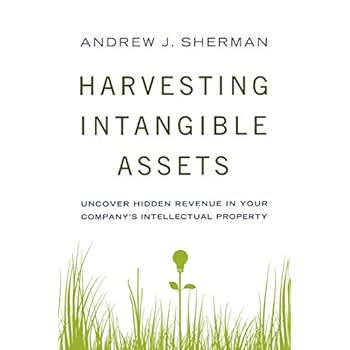
Description for Harvesting Intangible Assets: Uncover Hidden Revenue in Your Company's Intellectual Property
Review �You will come away with a much better practical sense of how intangible fit into business strategy and how to develop that strategy�.Sherman has made an strong contribution towards helping business develop strategies utilizing their intangibles. The book should be widely read.� --The Intangible Economy ��a thoughtful eye-opener.� - Inland Empire Business Journal Read more Book Description Whether you call it �harvesting intangible assets� or �intellectual property management,� organizations must make the most of everything they have to offer if they want to remain competitive. Yet, the majority of companies are oblivious to the wealth of revenue-producing opportunities hiding just below the strategic surface. In this thought-provoking book, author Andrew J. Sherman shares insights and expertise gleaned from his work with some of the world�s leading companies who have capitalized on intellectual assets such as patents, trademarks, customer information, software codes, databases, business models, home-grown processes, and employee expertise. Featuring instructive examples from organizations including Proctor & Gamble, IBM, and Google, the book reveals how companies large or small can implement IP-driven growth and licensing strategies, foster a culture of innovation, turn R&D into revenue, and much more. Smart companies reap what they sow. This book gives readers the tools they need for a profitable harvest. Read more From the Inside Flap Smart companies reap what they sow. If your organization isn�t digging deep enough on a regular basis to recognize the wealth of revenue-producing opportunities that may be hiding just below the strategic surface, you could be short-changing your stakeholders�and your company�s future�out of a powerful harvest that can make all the difference to your bottom line. As an internationally recognized authority on the legal and strategic aspects of business growth, author Andrew J. Sherman has worked with some of the world�s leading companies, helping them strategically leverage their intellectual assets such as patents, trademarks, customer information, software codes, databases, business models, systems, processes, and employee expertise. In Harvesting Intangible Assets, he reveals how companies large or small can implement IP-driven growth and licensing strategies, foster a culture of innovation, turn R&D into revenue, and much more. Did you know that after Olestra was less than warmly received in the commercial marketplace as a fat substitute, Procter & Gamble gave it a second�extremely lucrative�life as a cleanser for contaminated soil? When the markets hit their lows in 2008, how did IBM, 3M, Google, and Apple retool their business models and strategic priorities to take advantage of the valuable opportunities while other organizations rapidly lost market value? Featuring instructive and fascinating examples, this book reveals how some of the world�s leading companies have cultivated and leveraged critical intangible assets. You�ll discover eye-opening and practical strategies that can make all the difference in understanding the opportunities you have and making the most of them. You�ll learn how to institute systems for managing your intellectual capital, train your leaders and managers to more effectively harvest your company�s ideas, and maximize and drive your shareholder value. Whether you call it �harvesting intangible assets� or �intellectual property management,� you need to make the most of everything your company has to offer if you want to remain competitive. This thought-provoking book gives you the tools you need to reveal the bumper crop lying just below the surface of your organization. ANDREW J. SHERMAN is a partner in the Washington, D.C., office of Jones Day, and a top-rated Adjunct Professor in the MBA and Executive MBA programs at the University of Maryland and at Georgetown University Law School. Frequently called upon by the media to share his expertise, he has been featured or quoted in The Wall Street Journal, USA Today, The New York Times, BusinessWeek, Fortune, Investor�s Business Daily, Forbes, Entrepreneur, U.S. News & World Report, and other prestigious publications. His approach to leveraging intellectual assets was a cover story for Inc. magazine. He is the author of several books, including Mergers and Acquisitions from A to Z, Raising Capital, and Franchising & Licensing. Read more From the Back Cover ADVANCE PRAISE FOR HARVESTING INTANGIBLE ASSETS: �Part revelation, part wisdom, and part inspiration, Andrew J. Sherman�s [book] challenges us to rethink our business strategies in one of the most fascinating books on innovation in today�s marketplace. He provides a unique understanding of how we can all truly �harvest� our greatest asset�intellectual capital! This is an extraordinarily relevant charter for innovators of the 21st century.� � Dr. Donald F. Kuratko, The Jack M. Gill Chair of Entrepreneurship and Professor of Entrepreneurship, The Kelley School of Business, Indiana University�Bloomington �Harvesting Intangible Assets comes at a critical period in time for the nation�s economy and for the future of our nation's entrepreneurs. Andrew�s straightforward and inspirational �how to� approach is a must read for business owners and entrepreneurs who are in need of an effective growth and intellectual property harvesting strategy.� � Karen Kerrigan, President & CEO, Small Business & Entrepreneurship Council (SBEC); and Chairwoman of the Board, Center for International Private Enterprise (CIPE) �Harvesting Intangible Assets offers a complete guide to growing your business through the leveraging of your intellectual capital. Andrew J. Sherman is the growing company�s best friend and most passionate advisor when it comes to taking a business to the next level. Start reading this book today!� � Brian Moran, Executive Director, The Wall Street Journal �Harvesting Intangible Assets provides a strategic road map for how to build value and grow your company in today�s content and IP-driven marketplace. The ideas presented in this book are not only fresh and original, but they are also effective, and critical to competing and thriving in today�s competitive global economy.� � Chris Longley, Senior Vice-President, Thomson Reuters �If Andrew J. Sherman were alive during the lifetime of Thomas Edison, surely they would be good friends. The strategic approach which is at the heart of Sherman�s exhortation to corporate leaders to find and harvest intangible and unknown assets is aligned with everything that Edison believed and was the impetus for his many accomplishments. Read this book, then read it again. Thomas Edison would.� � John Keegan, Chairman & President, The Edison Innovation Foundation and Charles Edison Fund �Harvesting Intangible Assets is timely, insightful, and in-your face. Once again, Andrew J. Sherman has seen around the proverbial strategic corner and challenges us with a vision that is both provocative and engaging. This is a book that refuses to be ignored.� � Mike Bruce, President and CEO, InScope International, Inc. �A thorough and insightful look back to the future. Andrew J. Sherman has given American business a systematic framework to recapture the innovative and creative energy that built this country. The strength of our nation's future depends on embracing the key principles of Harvesting Intangible Assets.� - Donna Ettenson, Vice President of Operations, Association of Small Business Development Centers �Growth guru and thought leader Andrew J. Sherman practices what he preaches. When writing Harvesting Intangible Assets, he fully leveraged his most valuable intangible assets -- his formidable intellect, unrelenting curiosity, and lifetime of diverse business and legal experiences -- to deliver a comprehensive, practical roadmap for business success in our hyper-competitive global markets.' - Hugh Courtney, Vice Dean, University of Maryland's Robert H. Smith School of Business �Sherman has laid out a comprehensive road map for harvesting the single most important resource in most companies and countries � its intellectual property. This is a must-read book for every business leader and policy maker.� -Verne Harnish, CEO of Gazelles and Founder, Entrepreneur�s Organization and author of Mastering the Rockefeller Habits 'Andrew J. Sherman�s Harvesting Intangible Assets is a cleverly written guide to uncovering hidden revenue in your company�s intellectual property that I found especially profound. This book gives you the tools to uncover your creativity and harvest new ideas, strategies, and best practices to ensure success, and Andrew shares his insights in a way that only he can�with humor and style that keeps you wanting more. I highly recommend this read.' �Parnell Black, MBA, CPA, CVA, NACVA�s Chief Executive Officer �It is rare that you can find �everything� you want to know about a topic in one place. But if you are looking for the definitive work on all the myriad ways an organization can capitalize on its intellectual property and assets, this is it. Harvesting Intangible Assets should be required reading for every CEO.� -Robert A. Strade, Executive Director and CEO , Entrepreneur Organization (EO), Washington, DC 'Intellectual Capital is probably the most underutilized resource in most organizations. While many of them spend millions for patents, copyrights and trade secrets to lock this resource away until its shelf life is expired, Andrew J. Sherman encourages us to seed, �greenhouse,� grow, mature and harvest Intellectual Capital instead. The book is full of practical concepts and insightful examples of companies leading the way to seed ideas to harvest sustainable innovation. I�m sure that this book will be the new Farmer�s Almanac for the reader on his journey to become an �intellectual capital� Agrarian of the 21st century.' -Dr. Oliver Schlake, Ralph J. Tyser Teaching Fellow and Senior Executive Education Fellow, Robert H. Smith School of Business, University of Maryland �Andrew J. Sherman makes a compelling case for assessing, managing and maximizing intellectual capital, which should � yet often doesn�t � account for such a large portion of a company�s true value. An enjoyable and important book for today�s corporate executives. This is an important book to be read by today�s corporate executives, who should be carefully managing their �crop� of intellectual capital.' -Dave Groobert, U.S. General Manager, Environics Public Relations 'In his trenchant new book Harvesting Intellectual Assets, author, lawyer and thought leader Andrew J. Sherman reveals for the first time not just how to identify these hidden tools, but also how to fuse them with the specific actions that create competitive advantage. No other work so cogently clarifies the least understood but most valuable aspects of our organizations.' -TD Klein, investor and author of Built for Change: Essential Traits of Transformative Companies 'Global thought leader Andrew J. Sherman provides a fresh perspective and looks at intellectual property in a whole new light. Sherman's great new book points out the subtleties of hidden assets and innovation which could make a world of difference in a life of any company, economy and society.' -Sarah Djamshidi, Executive Director, Chesapeake Innovation Center (CIC) President, Maryland Business Incubation Read more About the Author ANDREW J. SHERMAN is a partner in the Washington, D.C., office of Jones Day and an internationally recognized authority on the legal and strategic issues of emerging and established companies. A top-rated adjunct professor in the MBA and Executive MBA programs at the University of Maryland and Georgetown University Law School, he is the author of Harvesting Intangible Assets, Franchising and Licensing, and Mergers Acquisitions from A to Z . Read more Excerpt. � Reprinted by permission. All rights reserved. CHAPTER 1 The Intellectual Capital Agrarian Never before in history has innovation offered promise of so much to so many in such a short period of time. �BILL GATES We are all farmers. We mark our turf. We protect our property. We plant our seeds. We nurture the soil. We plow our land. We combat adverse weather and ecosystem conditions and overcome adversities. We prepare for our harvest. We carefully remove the frost from the vine. We hope for the best and prepare for the worst as the market sets a price for our efforts. We embrace the notion that our results will be directly tied to our levels of effort and expertise. We begin anew. No matter what your profession, no matter what your company does, no matter what your life situation may be�we all follow this fundamental and deeply rooted agricultural process in some way throughout the days of our lives. We are all the new agrarians. But do we recognize ourselves as such? Have we learned from the successes and failures of the agrarian economies that preceded us? Can we learn to apply the traditional as well as the latest best practices of farming to our daily lives and in the growth of our companies? How can we make our lives more enjoyable and enriching and our companies more productive and profitable by adopting an agrarian approach to life planning, time management, resource allocation, innovation harvesting, and business model reshaping? Consider the following questions as they apply to your life and to your business: - Have you carefully selected a territory that is fertile for growth and right for your type of crop? - Do you understand the dynamics of your ecosystem? - Have you done everything in your power to properly nurture the soil and enhance the land�s ability to produce? - What seeds will you plant, and why? - Are you ready to invest the time and energy to care for these seeds once planted? - Whom will you hire to help you raise, harvest, and sell the produce at your farm? - What tools, resources, and expertise will you require to maximize the fruits of your harvest? - What adverse weather or market conditions must you overcome to be successful? - Who else is growing these same crops? How does their experience compare to your own? - Do you have a keen sense for the cycles and timetables that will optimize your harvest? - What is your game plan for bringing your crops to the marketplace? Will you do it alone or join with others? - What are your distribution channels, and who are your target customers? On what basis and criteria will they select your harvest rather than others�? On the basis of price? Quality? Convenience? Availability? - How will you allocate the revenues that this year�s harvest will bring? Have you performed a sensitivity analysis based on high/expected/low target ranges? - What steps need to be put in place to set the stage for beginning the process again? - What have you learned from the successes and failures of last year�s process to make next year even better? Each of these questions must be answered by every type of farmer every year in every country around the world. Every year, they ��bet the farm,�� overcoming the challenges of the wind, sun, drought, floods, and other conditions beyond their control to put food on all of our tables. But the questions also apply to each of us�in the growth and development of our companies and as applied to the growth and development of ourselves as humans and as an evolving society. And, just as with farming, if we care for the soil and harvest properly, we produce value. If we overwork or overtax the farm and add too many pesticides over too much irrigation, the outputs will be limited and potentially dangerous. Farmers who strive to perfect this process and to learn from the successes and failures of each year�s harvest enjoy financial stability and wealth creation. They work hard to control the variables that are in their power and develop contingency plans around the variables that they can�t control. They see the crops as an extension of themselves and are happy as they see them grow and progress. They enjoy the process and connect with the land in a spiritual way. But at the very core and soul of their existence is the relationship between themselves and their land and between their tools and their seeds and between the quality of their harvest and the dynamics of the marketplace. In building companies and fostering innovation, we must all embrace these same principles. We must put conditions in place that support a corporate culture likely to yield a productive harvest and be constantly planting the seeds of creativity, encouragement, curiosity, empathy, respect, challenge, and fulfillment. We must understand which tools will be most effective for reinforcing the underlying principles of this culture. We must take steps to manage the conditions that are within our control and develop ��Plan Bs�� for those that we can�t. Most important, we must fully invest in the growth and development of our human capital by providing education and training to our teams at all levels to teach how to become farmers inside our companies and in their own lives. Read more
Books are everywhere. Libraries big and small and bookstores are splattered all over college campuses and larger cities. They are all filled with one of the most important things of all time—books. Those who read books appreciate the multiple places to find books. Those who aren’t fans of books, don’t understand what could make readers want to obsess over books. There is a reason for their obsession, though. You hear it all the time: read every day.Reading is important because it develops our thoughts, gives us endless knowledge and lessons to read while keeping our minds active. Reading books to help us learn and understand and makes us smarter, not to mention the knowledge, vocabulary and thinking skills we develop.In the world today where information are abundant, reading books is one of the best ways to be informed. Though reading might seem like simple fun, it can be helping your body and mind without you even realising what is happening. What makes reading so important? It can be for these reasons and not just knowledge.For those who don’t enjoy it, you might change your mind after hearing about the benefits. Can something so easy and fun be so helpful in your life? Of course, it can! Reading can be a great benefit to you in many different ways—such as sharpening your mind, imagination, and writing skills. With so many advantages, it should be an everyday occurrence to read at least a little something.Books can hold and keep all kinds of information, stories, thoughts and feelings unlike anything else in this world. Can words, paragraphs, and fictional worlds be all that great for you and your health? It definitely can, and it is a timeless form of entertainment and information
Step-By Step To Download Harvesting Intangible Assets: Uncover Hidden Revenue in Your Company's Intellectual Property
- Click The Button "DOWNLOAD" Or "READ ONLINE"
- Sign UP registration to access & UNLIMITED BOOKS
- DOWNLOAD as many books as you like (personal use)
- CANCEL the membership at ANY TIME if not satisfied
- Join Over 80.000 & Happy Readers.
OR

No comments :
Post a Comment